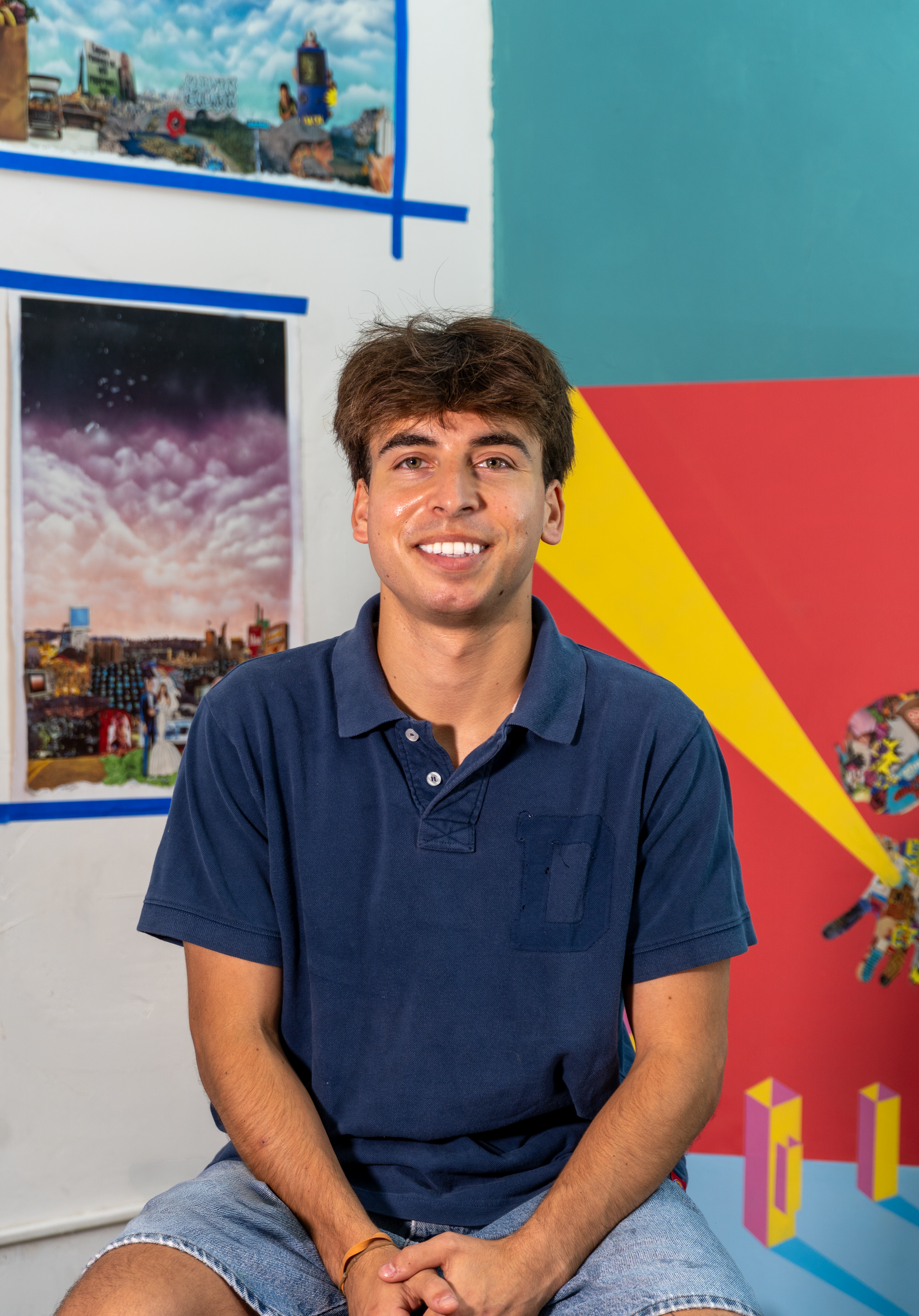
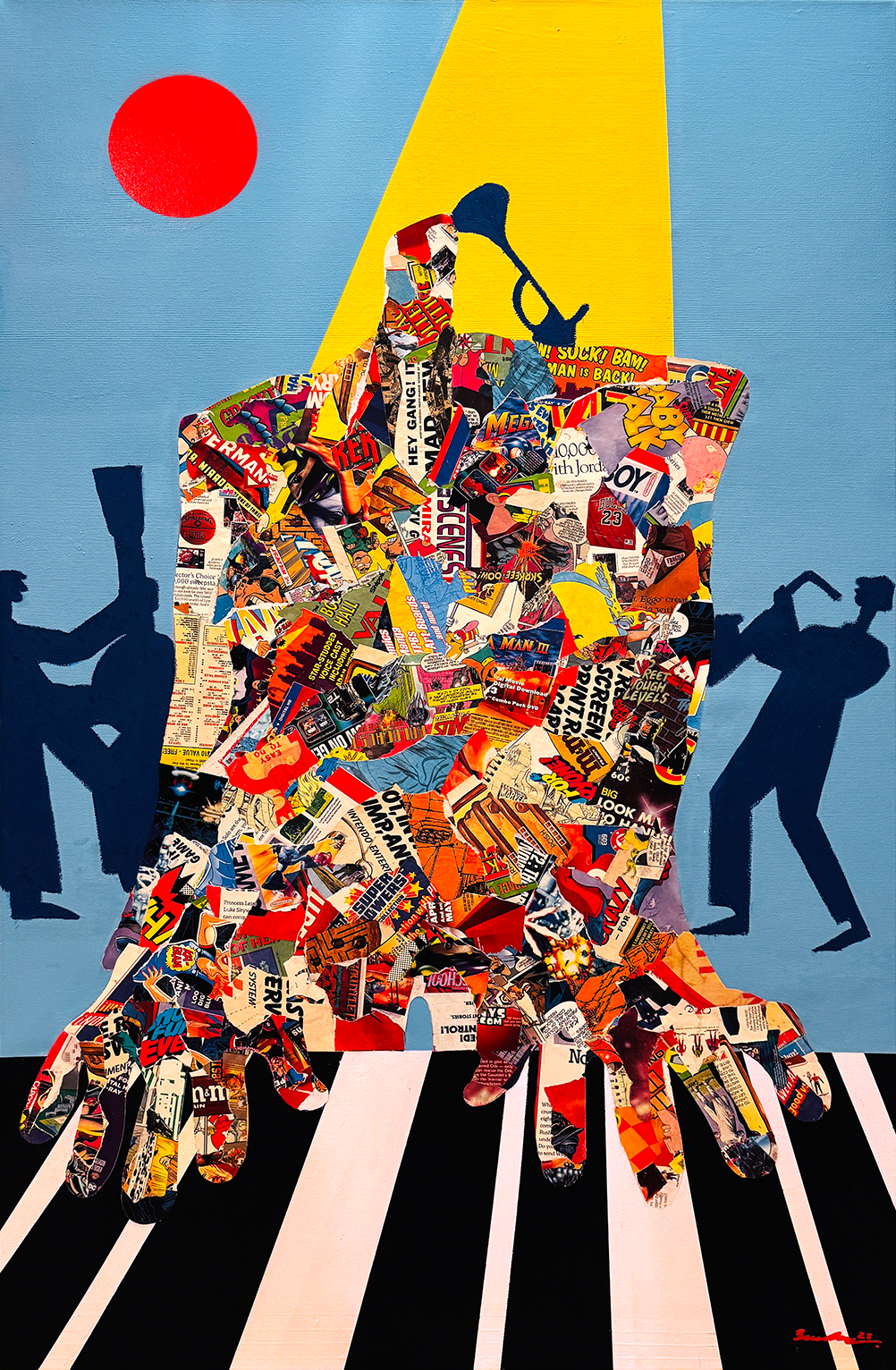
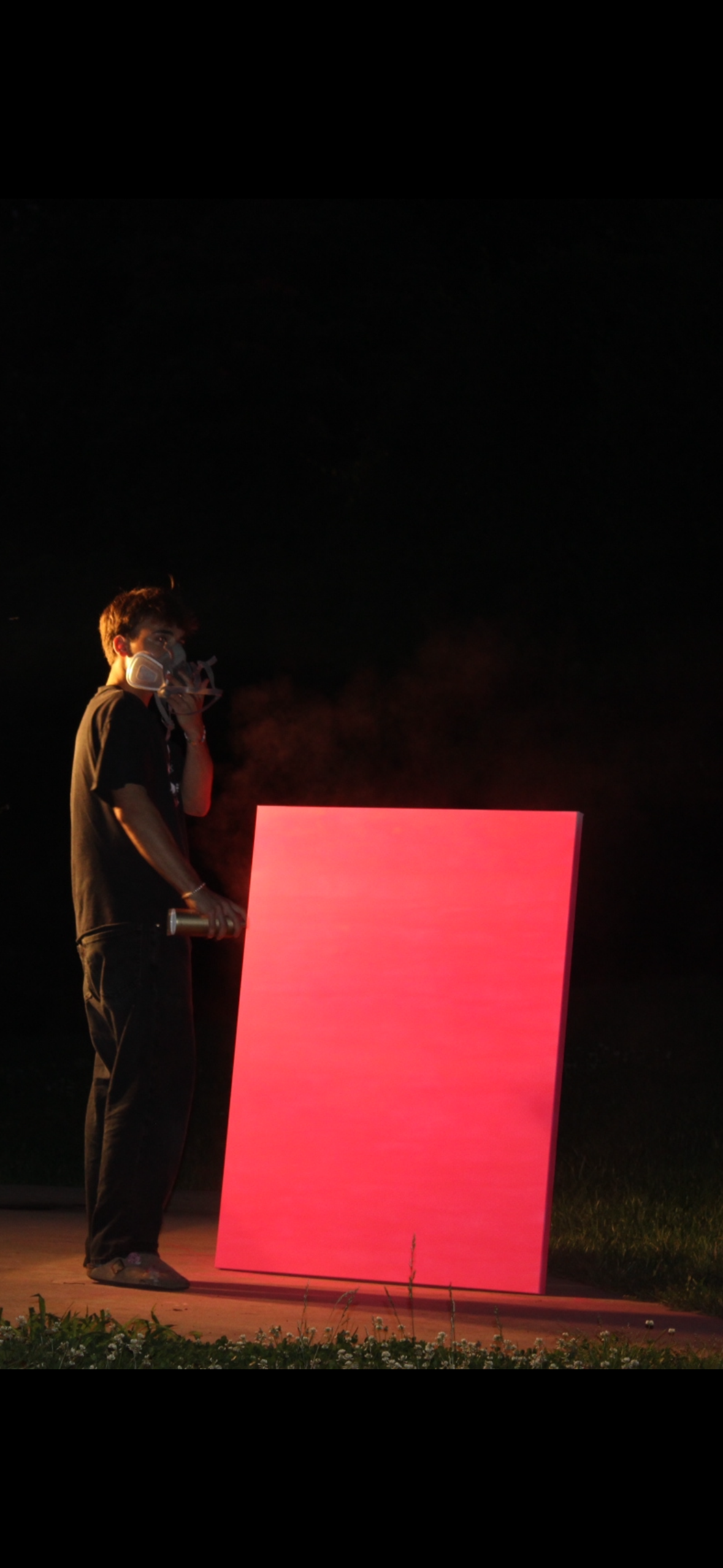
Self-taught mixed-media artist Bennett Pascal works at the fluid intersection of Pop Art painting and surreal collage.
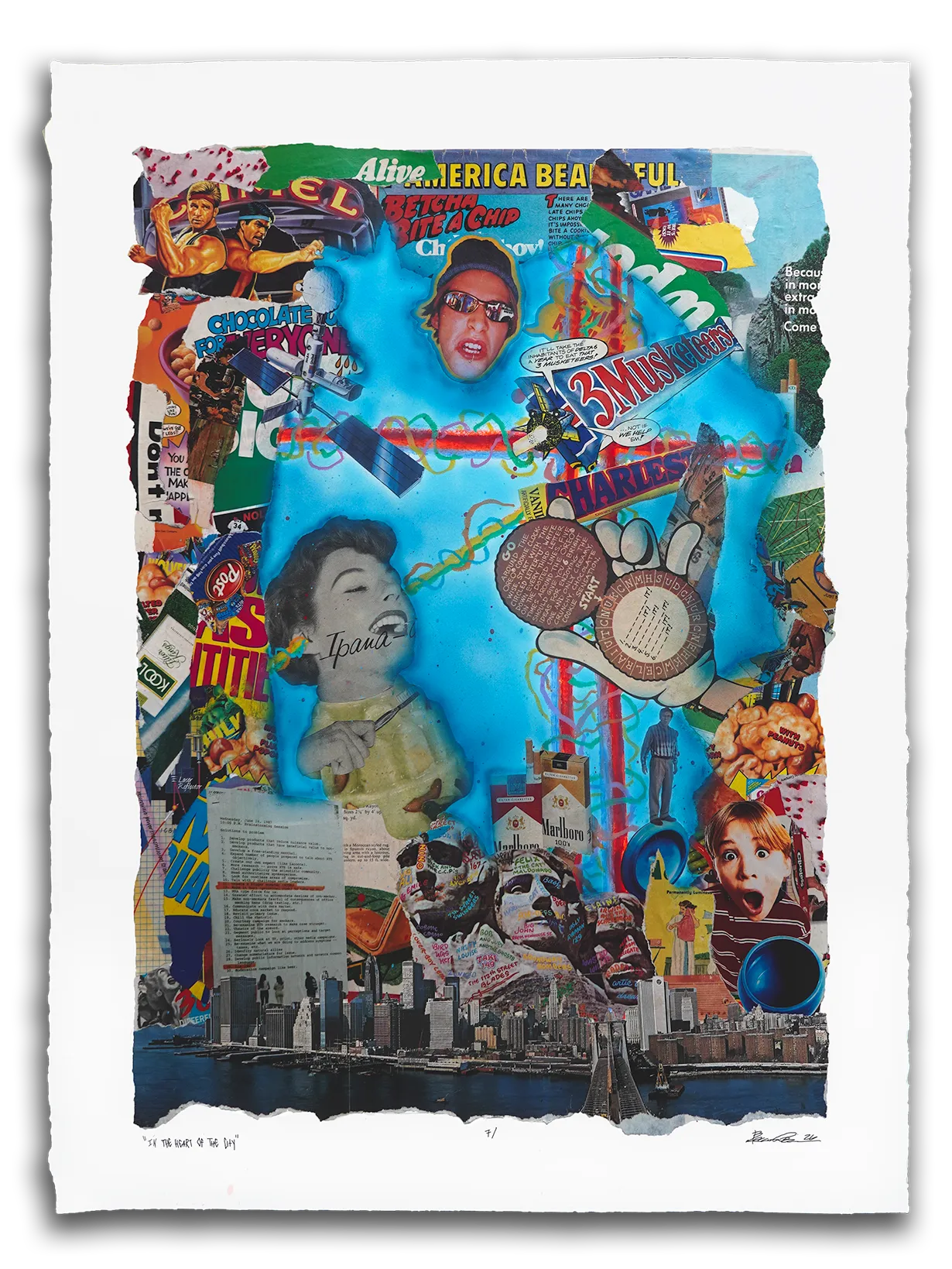
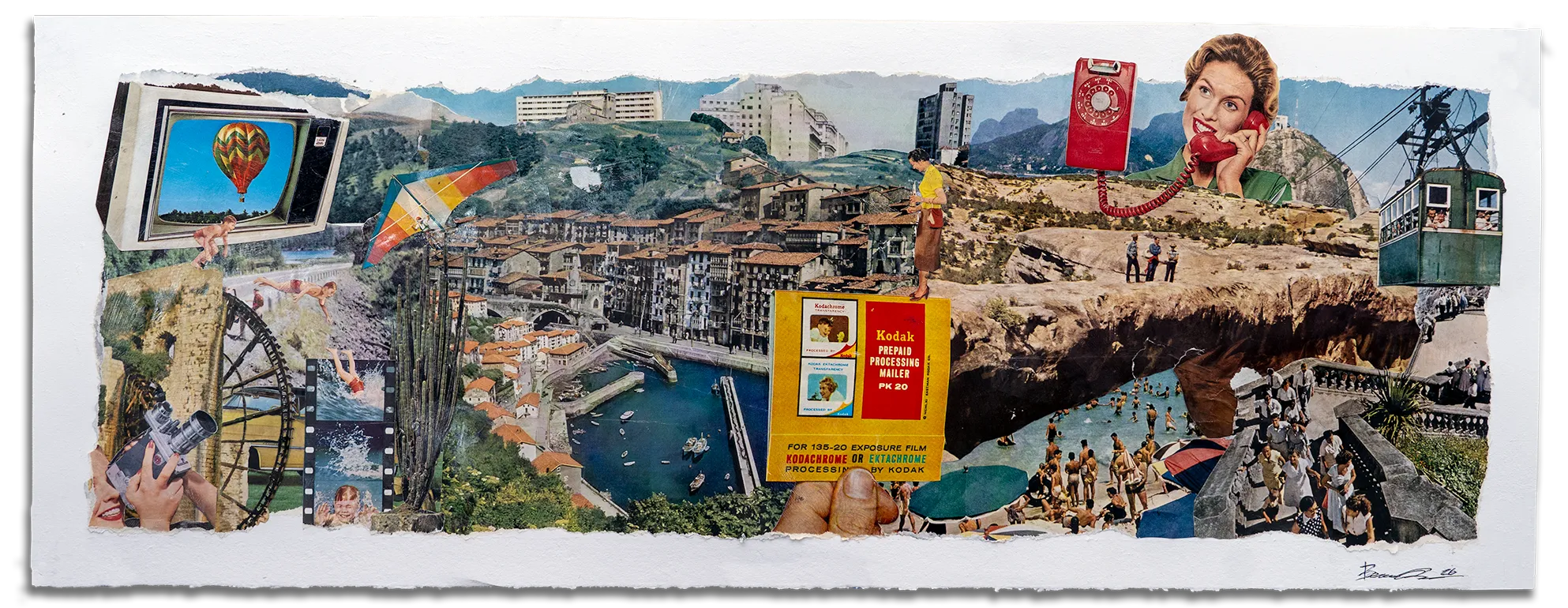
Working with acrylic, spray paint, found imagery, and vintage paper, he assembles discarded fragments, old advertisements, architectural photography, magazine clippings, and forgotten ephemera, into vivid environments where disparate eras and geographies collide.
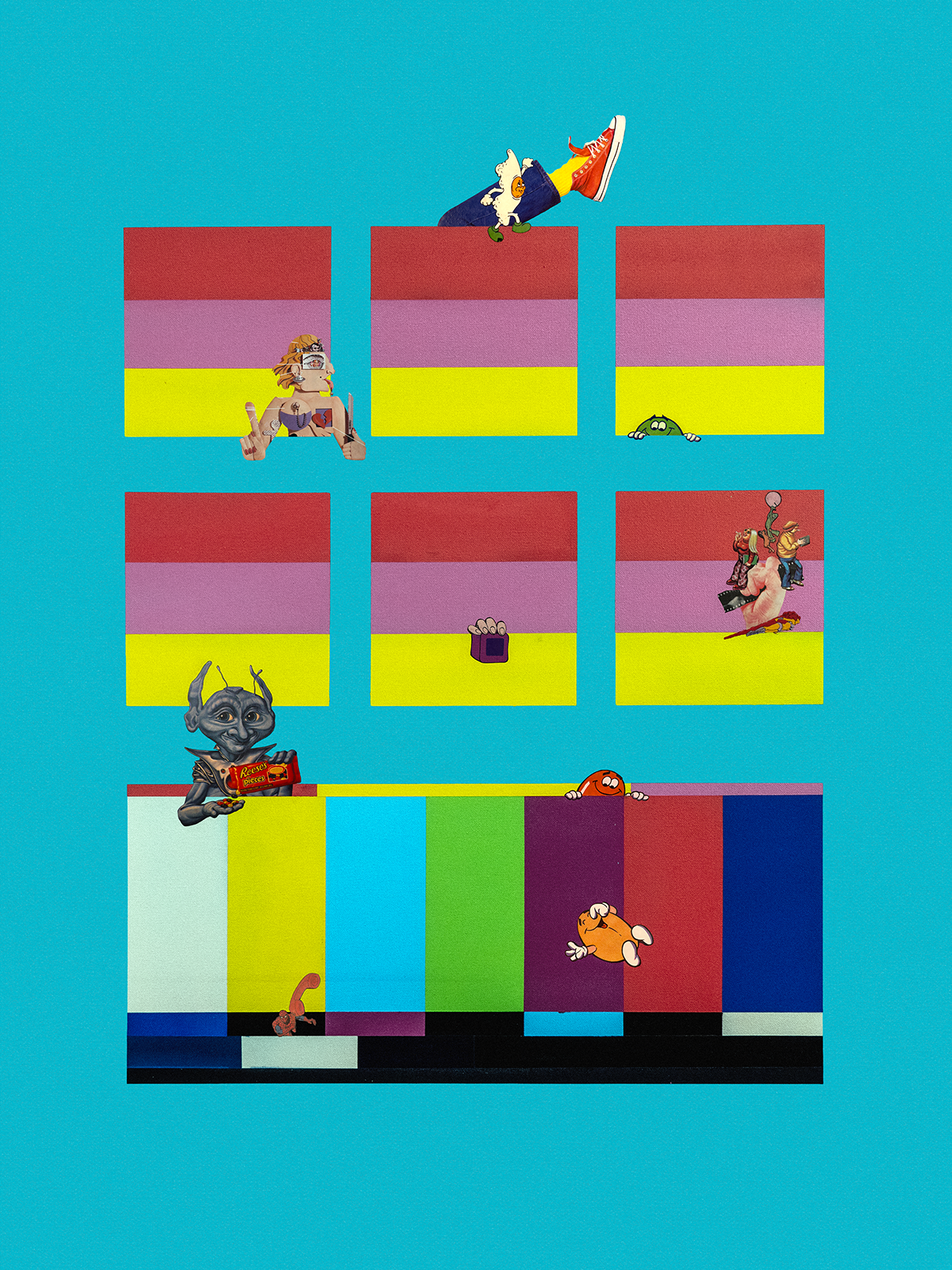
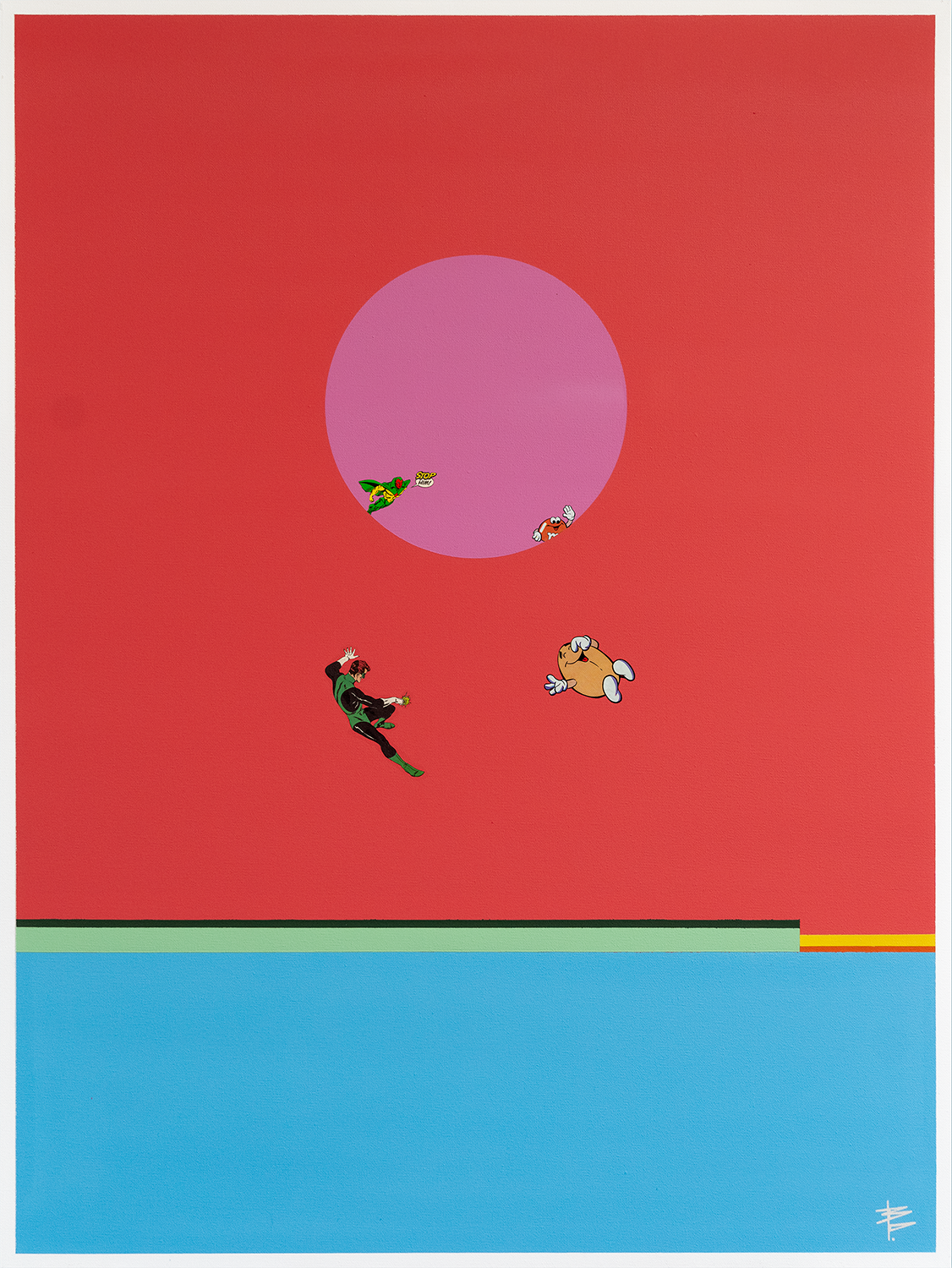
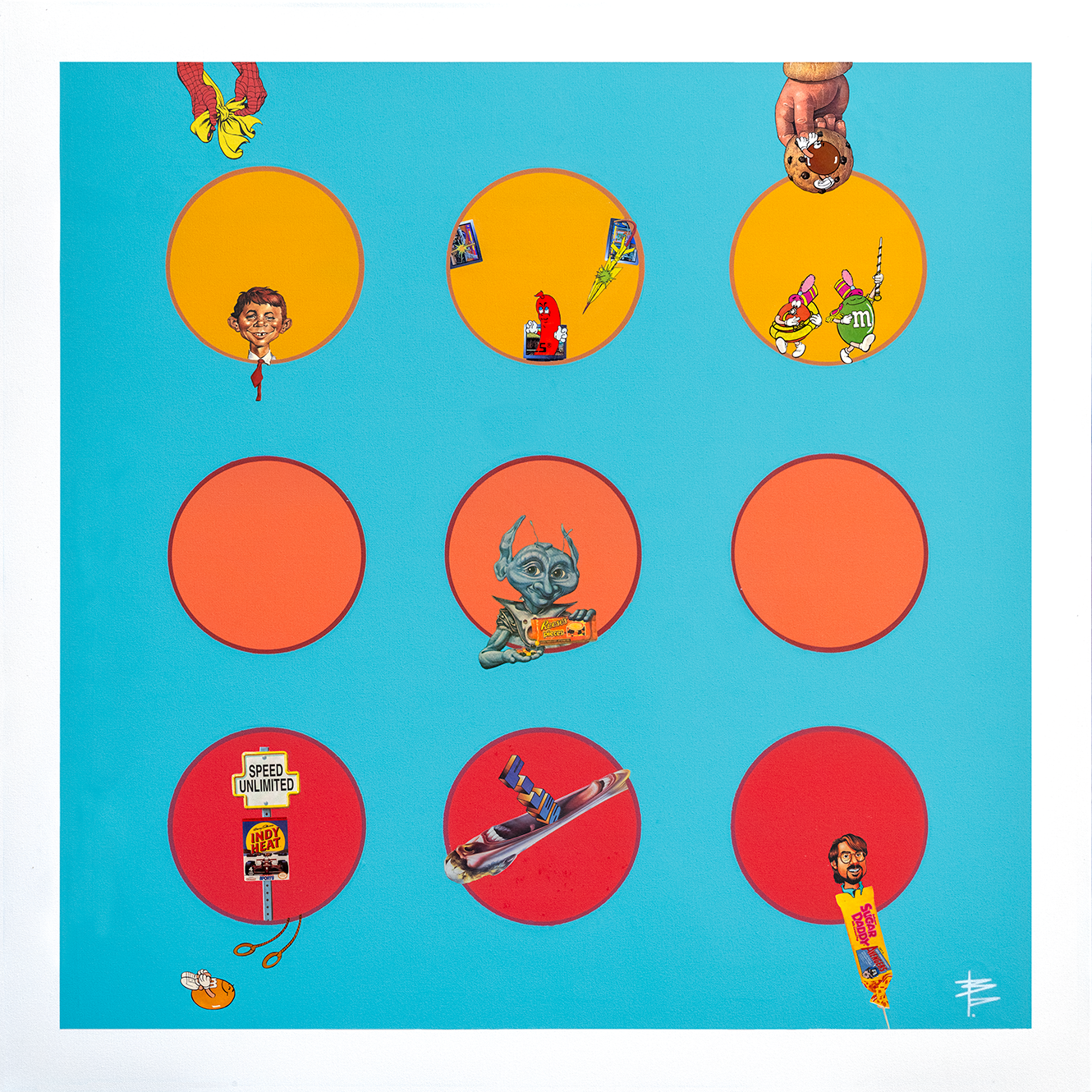
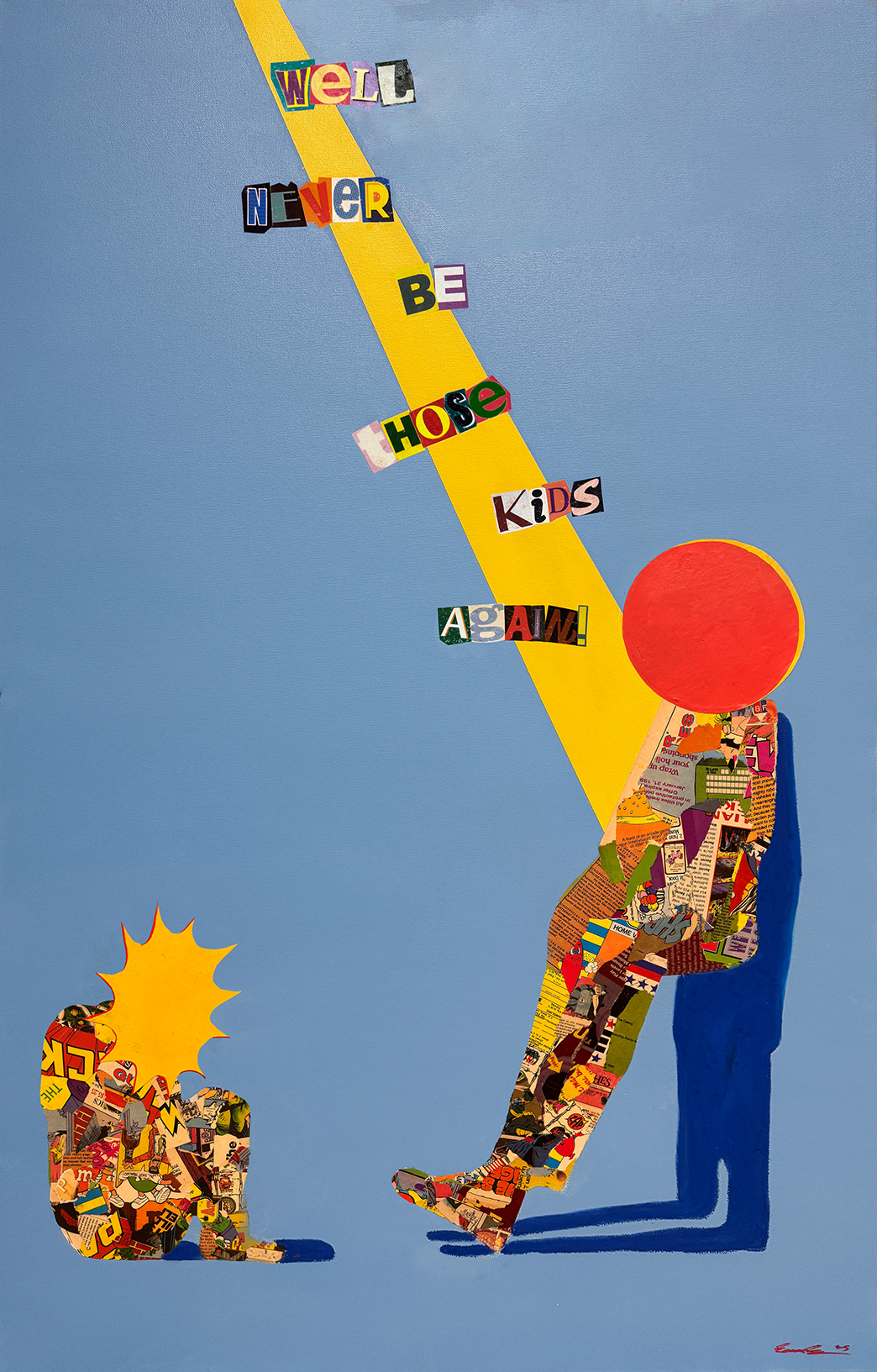
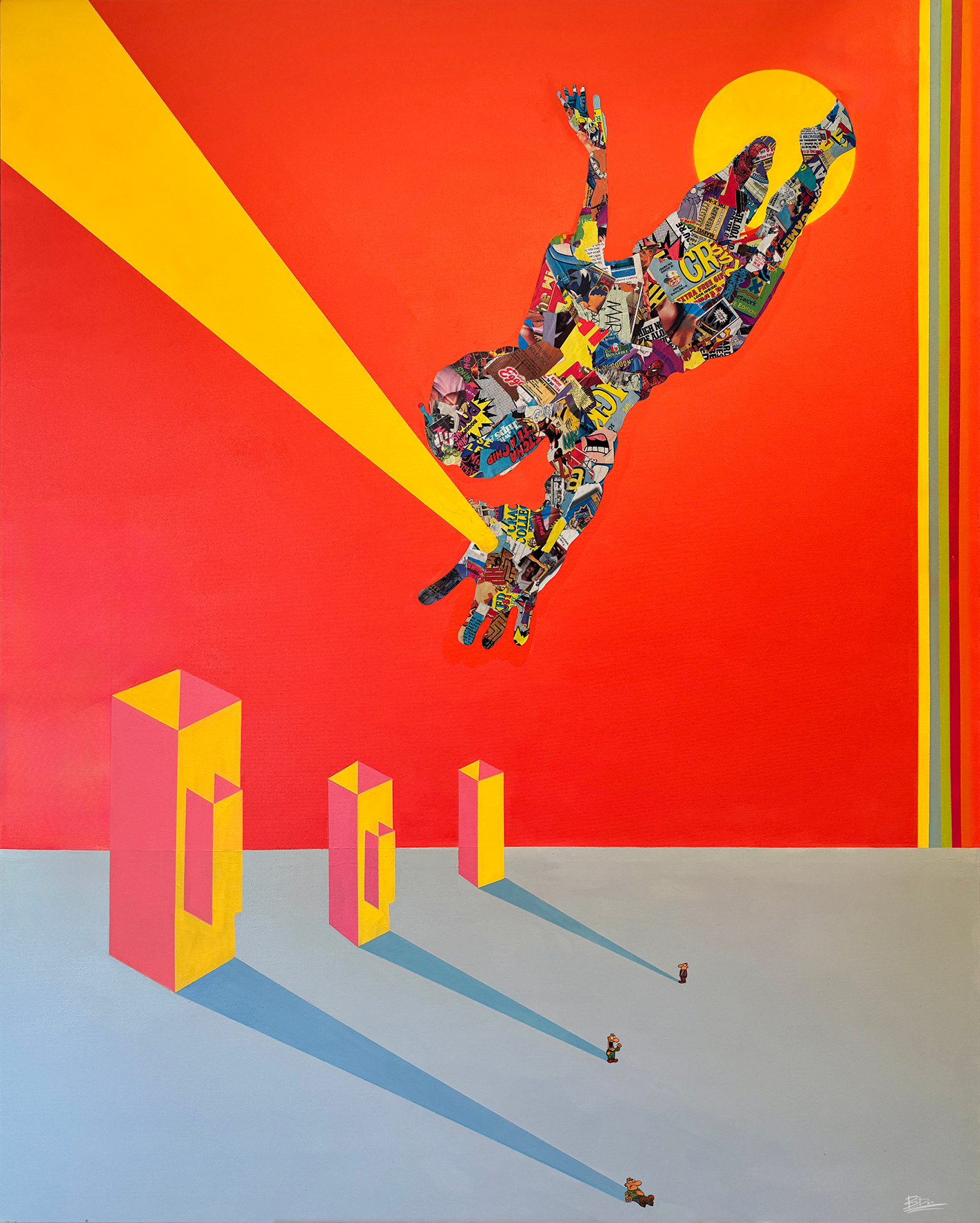
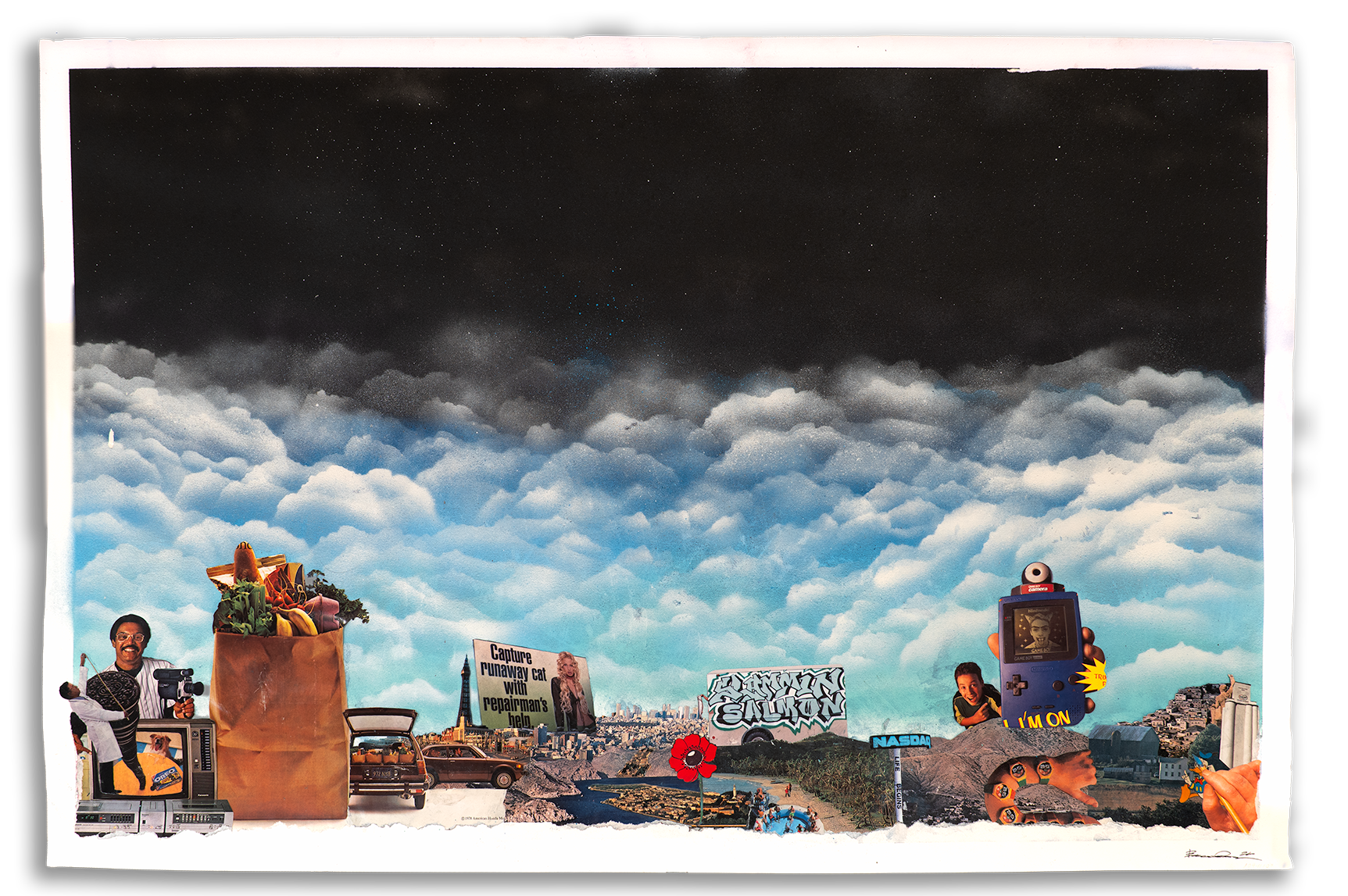
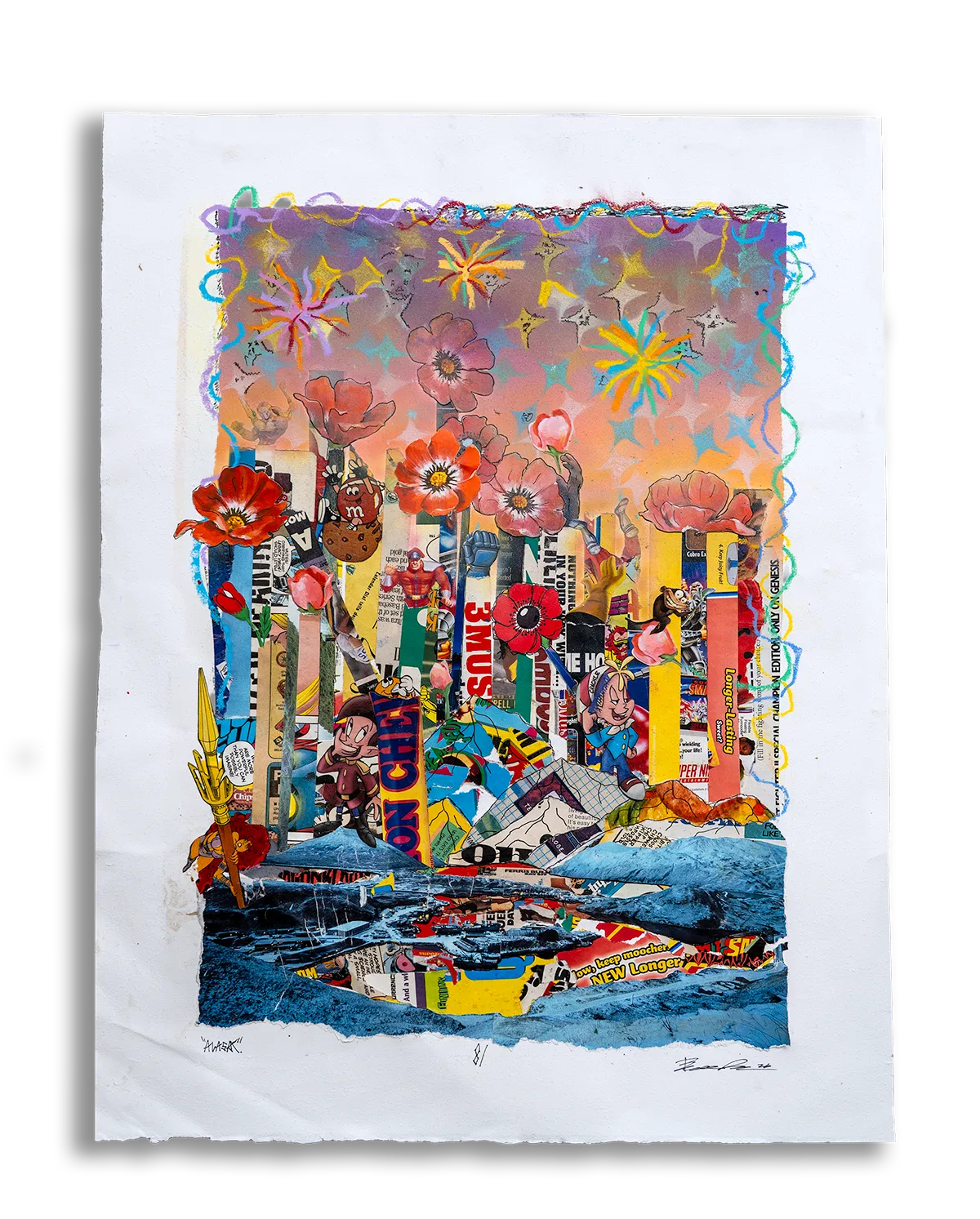
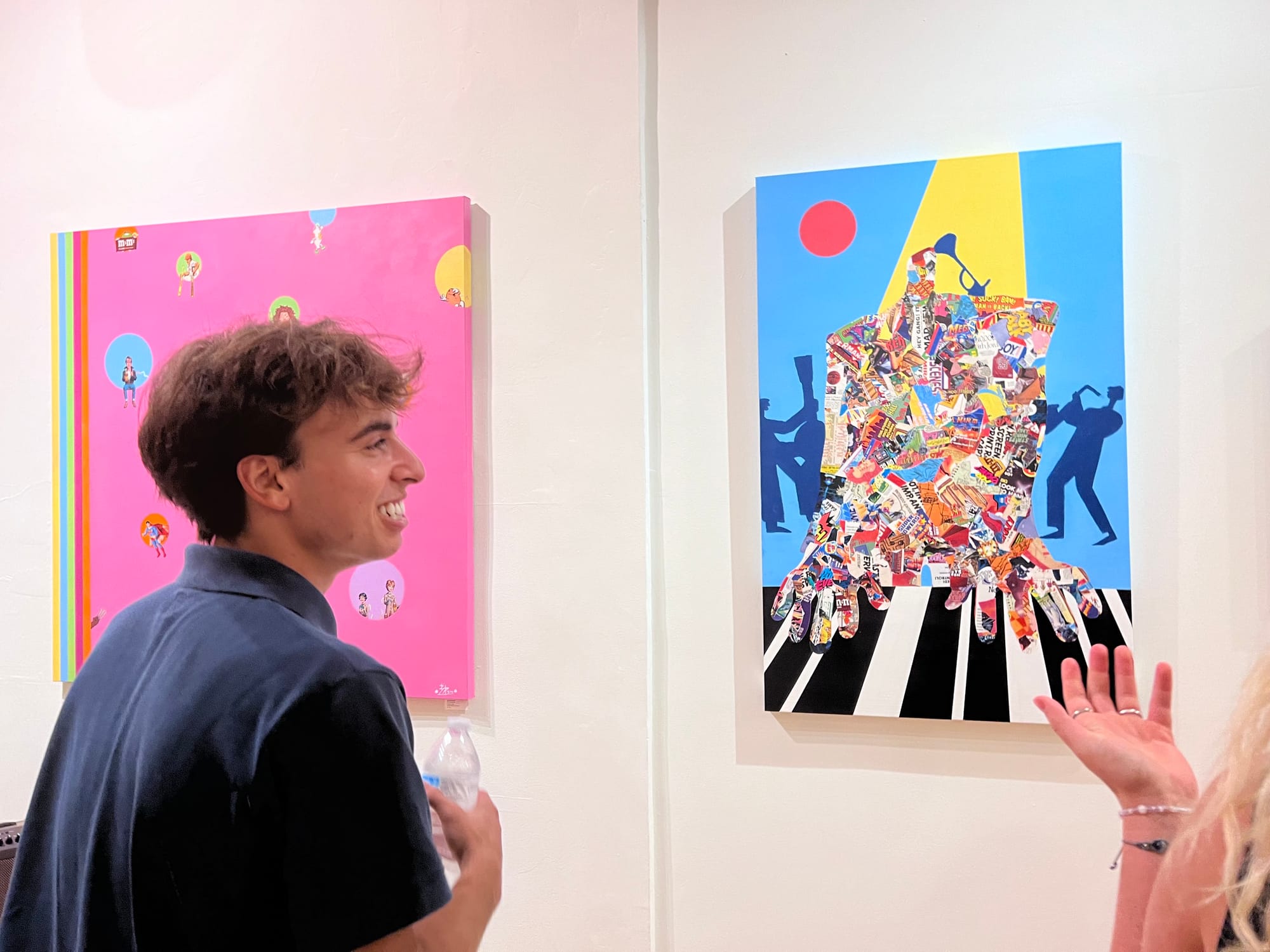
His canvas works draw heavily on high-contrast colour theory and bold geometric structures, while his paper collages move into distinctly cinematic territory, constructing fictional cities and landscapes out of dozens of real-world locations.Viewed from a distance, a composition reads as a single, cohesive scene. Up close, it dissolves into individual historical references, asking the viewer to slow down and trace the separate narratives occupying the same space.
Pascal’s creative process relies entirely on instinct and visual discovery rather than a rigid initial concept. Old magazines, photographs, and architectural remnants serve as raw material, images removed from one life and given another.Influenced heavily by collage artist Lance Letscher, Pascal’s search through print archives for one specific image often turns into hours of gathering entirely unrelated materials. The original plan is frequently abandoned in favor of an unexpected connection.
A fragment chosen strictly for its color or texture might suddenly connect with an image from a different decade or a city thousands of miles away, altering the direction of the entire piece.
“I don’t usually begin a piece knowing exactly what it’s going to mean,” Pascal says. “I let the process lead me there.”
Having developed his practice outside the traditional art-school-to-gallery pipeline, Pascal holds a clear perspective on the barriers within the art world. He advocates for direct, accessible pathways between independent creators and institutional spaces like galleries, curators, and collectors, emphasising that a vast amount of compelling work exists beyond established systems. He approaches the industry with a focus on community over competition, believing that creative success shouldn't happen at someone else's expense. For Pascal, artistic momentum stems from personal conviction and genuine engagement with the craft.
“If you don’t believe in what you’re making, it’s hard to expect anyone else to.”
Looking ahead, Pascal remains focused on refining a visual language that feels unmistakably his own across both canvas and paper, alongside plans to pursue an MFA and expand his gallery presence.
His work also draws significant inspiration from cinema, particularly the saturated color palettes and world-building of films like La La Land.
Moving images represent a natural evolution for his practice, applying the exact same principles of editing, framing, and atmosphere to film that currently give his collages their strange, memory-like resonance, occupying a middle ground between real-world observation and pure invention.