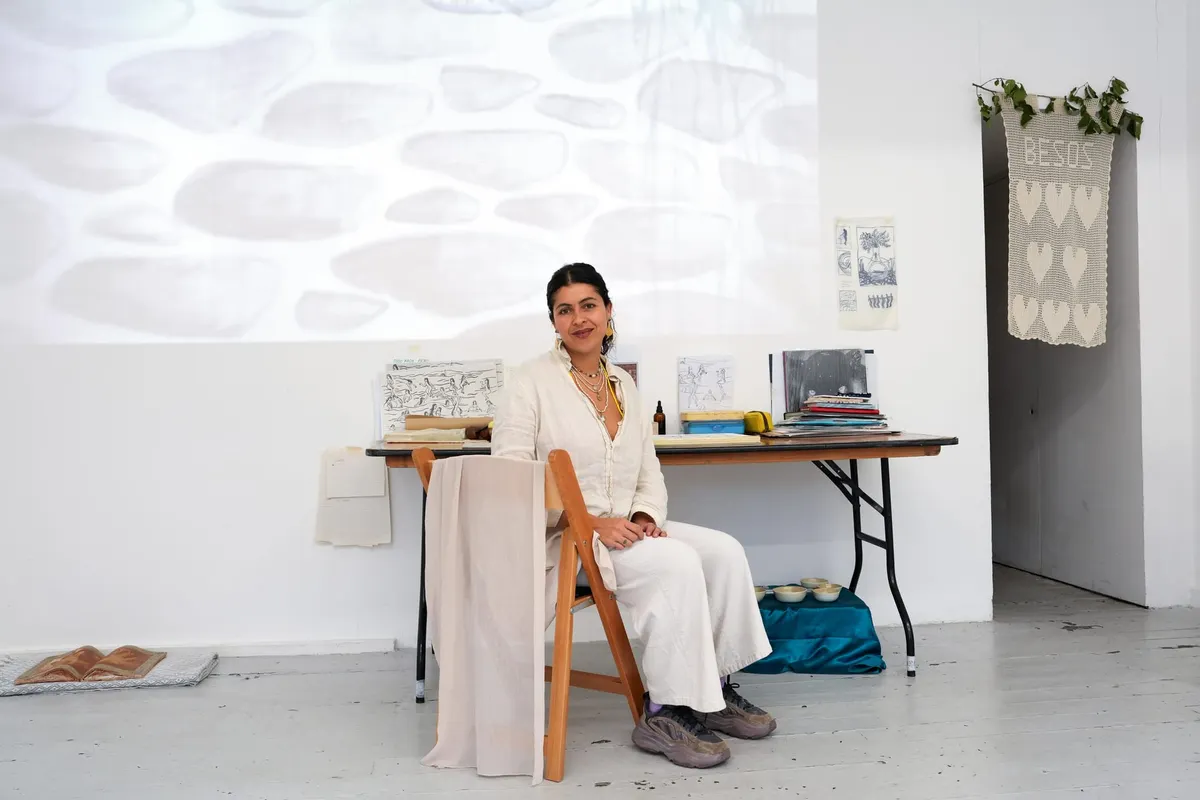
Aileen Gavonel Arenas describes her work in three words: fragility, ritual and repair.
The Peruvian artist, who works across ceramics, sculpture and installation, is drawn to the ways materials can hold memory and create relationships between bodies, territories and different forms of knowledge.
Based in Lima, Aileen approaches clay as a kind of material diary. She rarely begins with a fully formed concept. Instead, she pays close attention to what is happening around her, using materials and gestures to process the experiences, questions and tensions of her immediate surroundings.
Her recent project, I Forget That I Am on an Island, was presented as a process room at Somers Gallery in London. It began with a feeling of inhabiting a place without fully recognising the relationships that connect her to it.
“The title came from the strange realisation that I could be living on an island and barely think about the sea.”
The project became a way of considering disconnection, both from the environments we inhabit and from forms of knowledge we tend to overlook. Dreams were central to that exploration. Through ceramics, glass and sculptural installation, Aileen asks how materials, gestures and everyday rituals might carry knowledge that is difficult to put into words.
“Dreams became an important part of this exploration, opening up questions about intuition, desire, and the ways we make sense of experiences beyond conscious thought.”
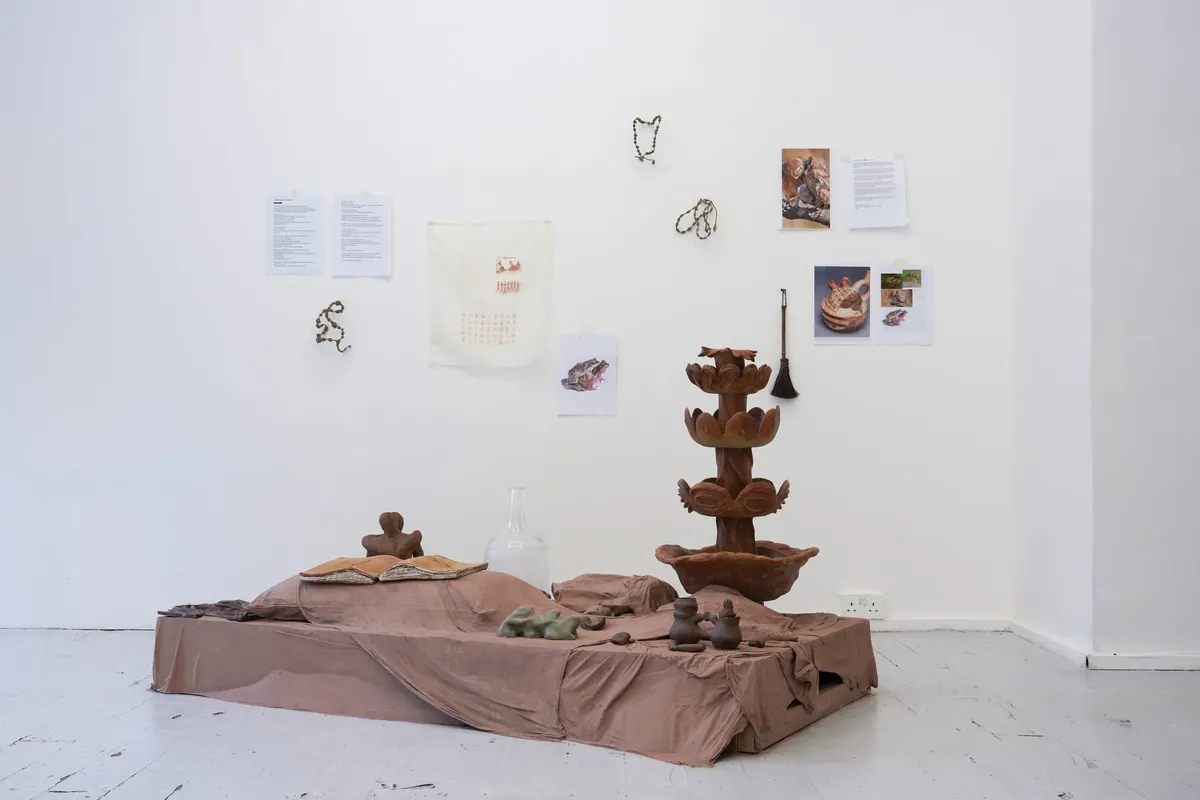
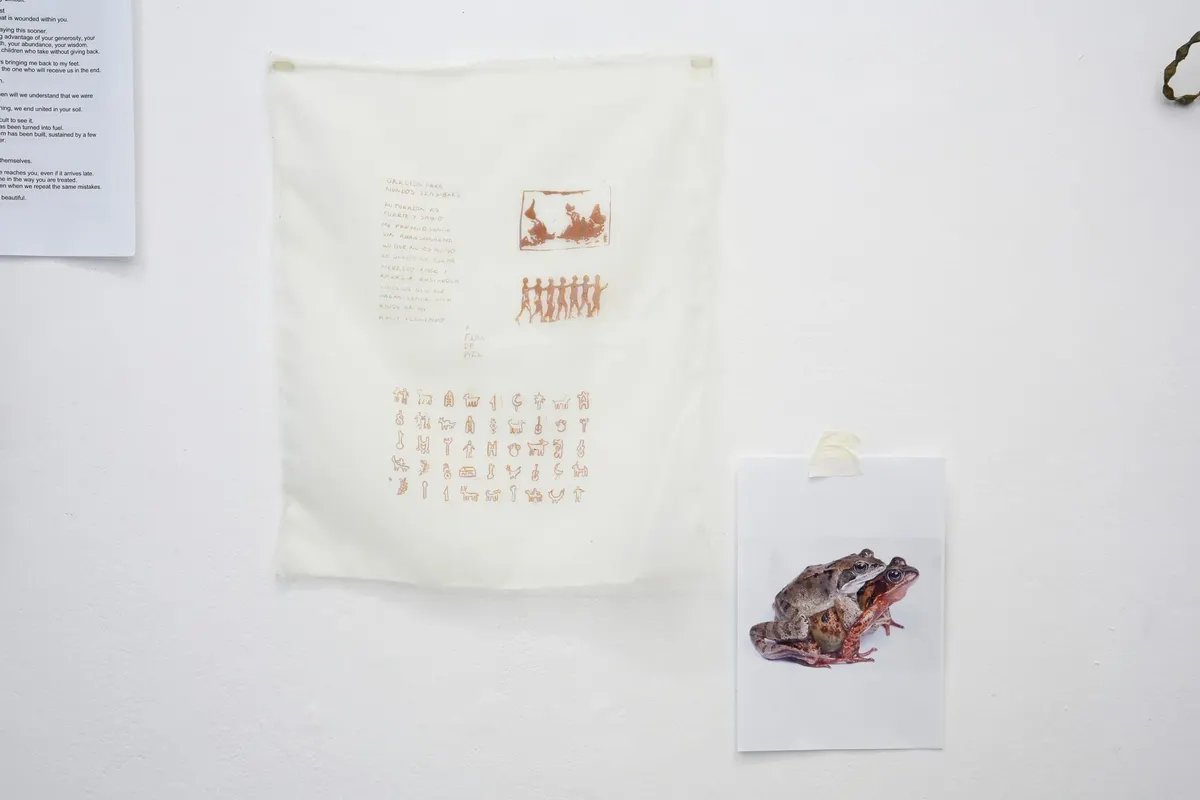
Images: Jaime Pazmiño
Aileen describes this intuitive process as a “material diary”. Working with clay gives her a way to explore experiences and questions she cannot yet put into words. Often, she only begins to understand why she was drawn to a particular form or material after spending time with it.
“I started to see the studio as a space where I could think through things that I hadn’t yet found the language for.”
The shift that reshaped her practice was learning to let something into the work before she understood it. She recalls once believing a project had to start with a clear question or concept, and that making was simply the search for the right form. Over time, she began to follow recurring images, dreams and an unexplained pull towards certain materials.
Staying with uncertainty and letting the work reveal its own questions has changed how she thinks about knowledge itself. Sometimes, making something is what allows her to understand what she was trying to ask in the first place.
Likewise, Aileen wants viewers to share that experience. She isn’t interested in handing over neat answers; she wants them to move through uncertainty and intuition.
“I hope people might recognise something familiar in the work while also encountering something they cannot quite explain.”
Encounters with other people also shape her work. She sees them as a kind of mirror, revealing aspects of ourselves that might otherwise remain unseen. Approaching another person with attention and openness can bring new ways of perceiving the world.
“I have come to understand knowledge as something that moves between people, materials, gestures, and lived experiences.”
She credits mentors, collaborators and friends with shaping her understanding of knowledge. She also draws inspiration from land defender Máxima Acuña, whose protection of her territory resonates with Aileen’s own questions about how we care for the places we inhabit.
"I can often recognise how the work has absorbed traces of different moments in my life. The process becomes a record of these encounters, not as a direct representation of events, but through material decisions, transformations, and gestures that accumulate over time."
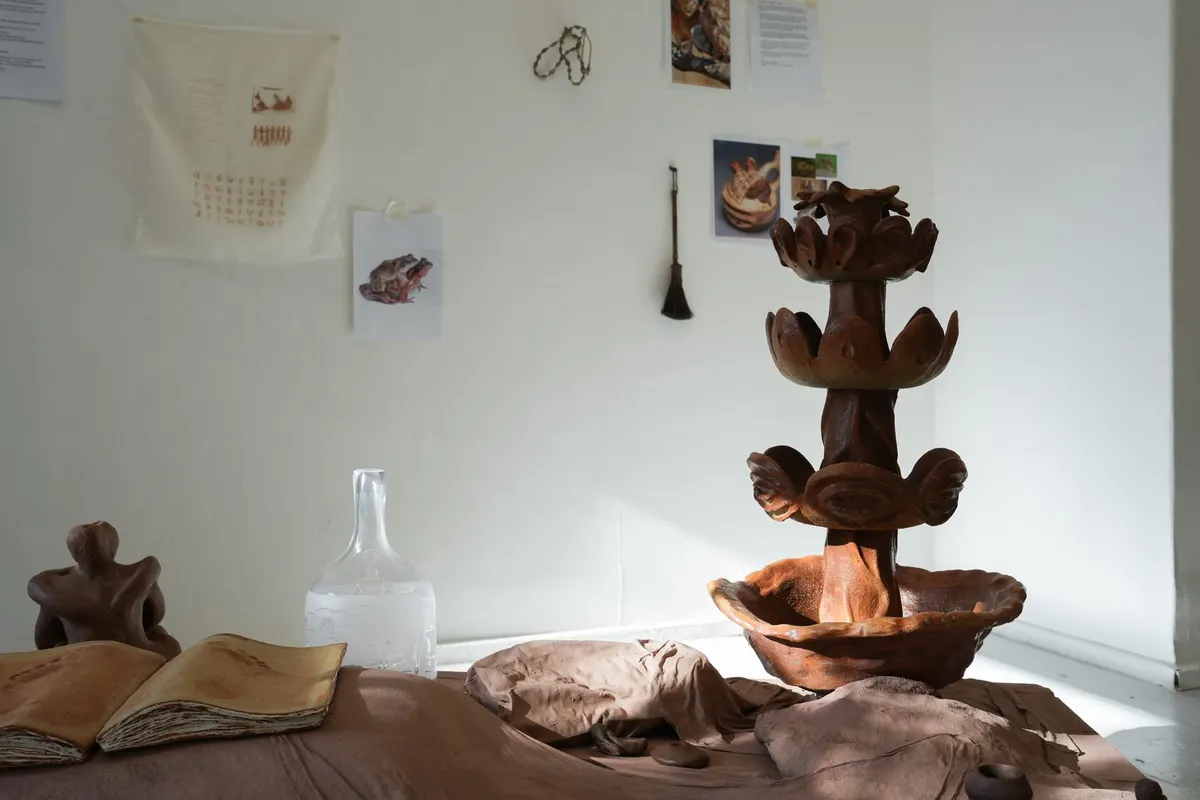
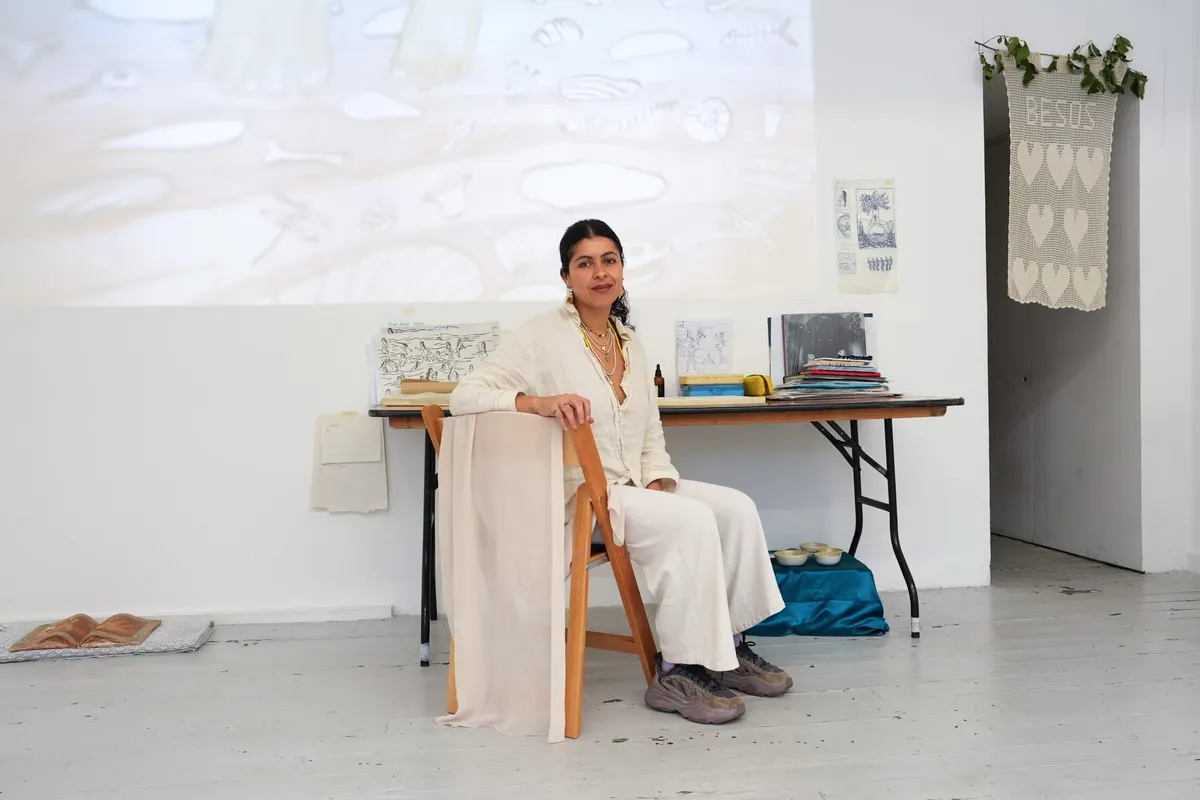
Images: Jaime Pazmiño
Aileen hopes her work encourages people to slow down and attend to the relationships they often take for granted: with their bodies, materials and the environments they inhabit. She wants to open up questions about how we produce knowledge and what we consider worth listening to.
That concern extends to the hierarchy between fine art and craft, and the way certain materials, techniques and forms of knowledge are valued over others.
"Coming from Peru, where knowledge is often deeply embedded in the work of the hands and passed down through making, I have become increasingly interested in how our understanding of art is shaped by the cultural contexts we come from."
For Aileen, the ambition is clear: objects made to be used, touched, cared for or folded into ritual and daily life can hold knowledge, memory and meaning just as fully as work traditionally recognised as fine art.
"I would like to contribute to a more open understanding of artistic practice, one that takes different material traditions seriously and questions the social and cultural hierarchies that determine what is considered art, whose knowledge is valued, and why."
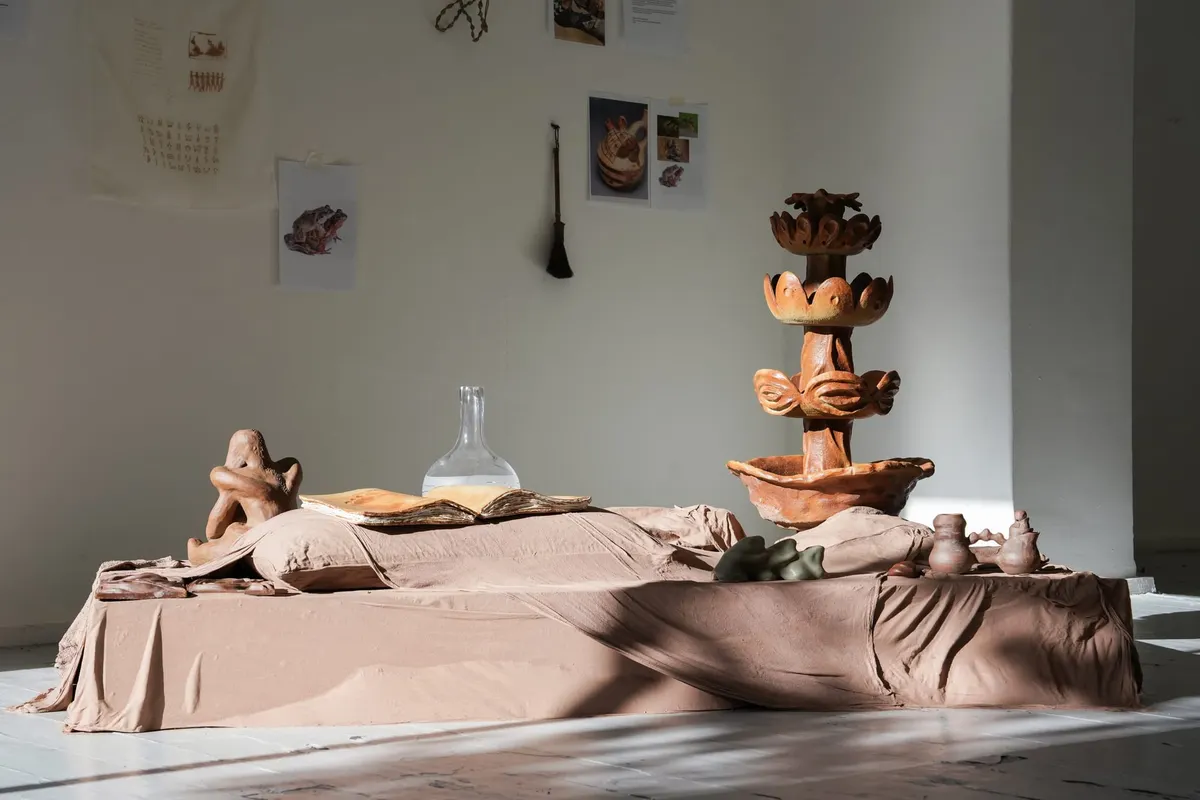
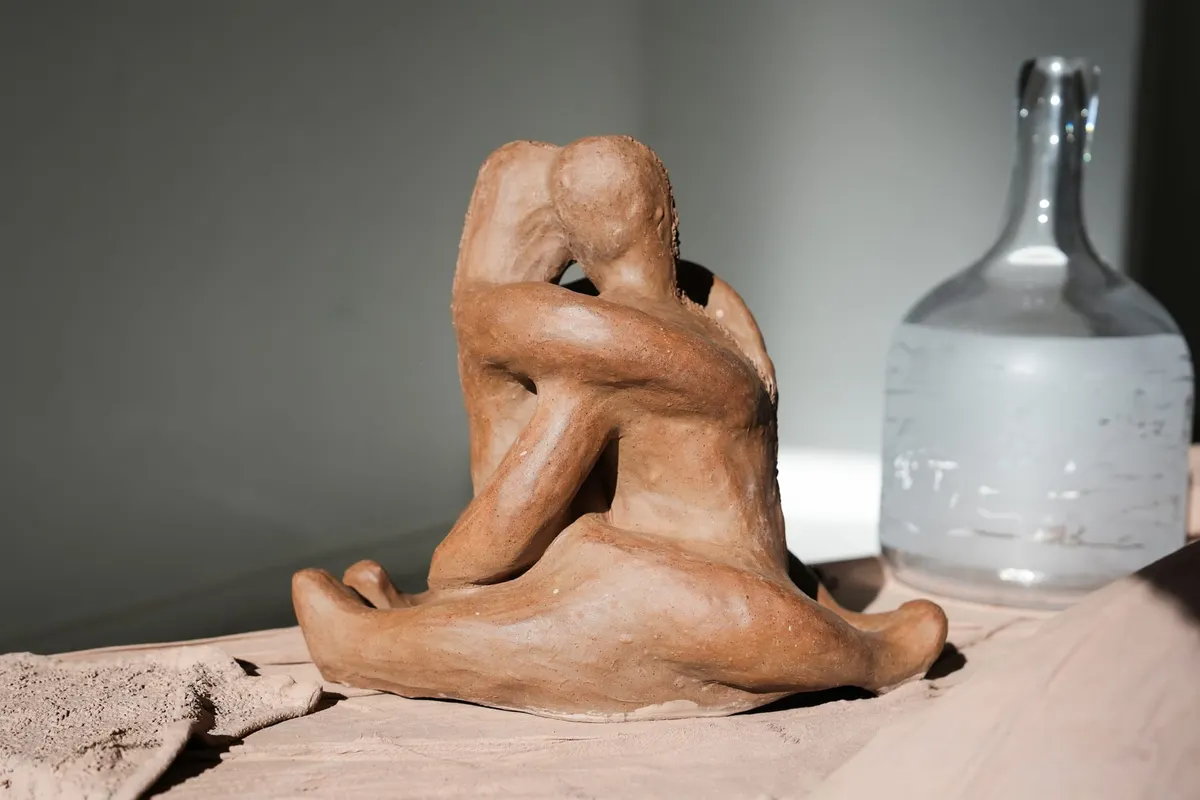
Images: Jaime Pazmiño
Next, Aileen is working towards an exhibition titled Me uniré en tu tierra, a phrase borrowed from a Peruvian vals. The work considers what it means to return to the land, not as a question of belonging, but as a way of reconnecting and reconsidering the relationship.
"I'm interested in the emotional and material dimensions of this return, and in how gestures, objects, and materials can help us approach the land as something we are in relation with, rather than simply something we inhabit."
As she continues working through ceramics and sculpture, she intends to let the materials and the process guide her, staying open to the questions that emerge around memory, ritual and forms of knowledge that are often overlooked.
More on INTROE Instagram
All Images: Jaime Pazmiño (@jamie_pazmino).